All blog features
Example longform front matter yaml
---longform: truetitle: All blog featuresdateCreated: 2026-01-17T22:44+01:00datePublished: 2026-01-17T22:44+01:00dateLastChanged: 2026-01-17T22:44+01:00tags: [] # Only tags defined in src/components/blog/tags.ts are allowedexcerpt: All blog features explained with examples...references: - id: einsteinUberErzeugungUnd1905 year: 1905 authors: - Albert Einstein title: Über einen die Erzeugung und Verwandlung des Lichtes betreffenden heuristischen Gesichtspunkt source: Annalen der Physik, 322, 6, p. 132-148 url: https://dx.doi.org/10.1002/andp.19053220607toc: true---The optional hidden: true hides a post from all lists.
Currently only used for this post.
Example shortform
---longform: falsedateCreated: 2026-01-15T22:44+01:00datePublished: 2026-01-18T22:44+01:00dateLastChanged: 2026-01-18T22:44+01:00tags: ['programming', 'links', 'ai']---This is an H2 heading
Create an H2 heading via
## This is an H2 headingNote that H1 headings are not available, as they are already used for the page title.
This is an H3 heading
Create an H3 heading via
### This is an H3 headingBasic formatting
Font style
**bold**, *italic*, ~~strikethrough~~renders as
bold, italic, strikethrough
This
- is an
- unordered list with first-level nesting
- This is
- a numbered list with fist-level nesting
- This
- is an unordered list with second-level nesting
- This is
- a numbered list with second-level nesting
Simple external links
Have a look at LessWrong.
Block citation
“Whenever you find yourself on the side of the majority, it is time to reform (or pause and reflect).”
— Mark Twain
Code:
> “Whenever you find yourself on the side of the majority, it is time to reform (or pause and reflect).”>> -- Mark TwainCitations with reference section
Add the reference to the front matter yaml:
references: - id: einsteinUberErzeugungUnd1905 authors: - Albert Einstein title: Über einen die Erzeugung und Verwandlung des Lichtes betreffenden heuristischen Gesichtspunkt year: 1905 url: https://dx.doi.org/10.1002/andp.19053220607Then cite in the text via :cite[einsteinUberErzeugungUnd1905].
Einstein properly explained the photoelectric effet [1].
Math
You can write inline math via $x = \logy(y)$, which renders as .
You can write math blocks, e.g.,
$$\begin{aligned}M &= \begin{pmatrix} a & b \\ c & d \end{pmatrix} \\E &= mc^2 \\F &= ma \\l &= s_{\mathsf{Z},0}^\mathrm{l} + s_{\mathsf{Z}, 1}^\mathrm{l} \big( 1 - h(\Lambda_\mathsf{X}^\mathrm{u} + \gamma) \big) - \mathrm{leak}_{\mathrm{EC}} - \log_2{\frac{2}{\epsilon_\mathrm{cor}}} - 4\log_2{\frac{15}{\epsilon_\mathrm{sec}' \sqrt[4]{2}}} \, .\end{aligned}$$which renders as
Code
You can write inline code `x = log(y)`.which renders as
You can write inline code x = log(y).
You can write a code block via
```pythonfig, ax = plt.subplots(nrows=1, ncols=2, layout='constrained', figsize=(4, 3))
ax.plot(xdata, ydata)
ax2 = ax.twinx()ax2.plot(xdata, ydata)
# Get plotted objects and their labelslines, labels = ax.get_legend_handles_labels()lines2, labels2 = ax2.get_legend_handles_labels()
# Add one legend with all labelsax.legend(lines + lines2, labels + labels2)```which renders as
fig, ax = plt.subplots(nrows=1, ncols=2, layout='constrained', figsize=(4, 3))
ax.plot(xdata, ydata)
ax2 = ax.twinx()ax2.plot(xdata, ydata)
# Get plotted objects and their labelslines, labels = ax.get_legend_handles_labels()lines2, labels2 = ax2.get_legend_handles_labels()
# Add one legend with all labelsax.legend(lines + lines2, labels + labels2)You can even provide a filename, and highlight code lines
```python title="example.py" {9-10, 13}fig, ax = plt.subplots(nrows=1, ncols=2, layout='constrained', figsize=(4, 3))
ax.plot(xdata, ydata)
ax2 = ax.twinx()ax2.plot(xdata, ydata)
# Get plotted objects and their labelslines, labels = ax.get_legend_handles_labels()lines2, labels2 = ax2.get_legend_handles_labels()
# Add one legend with all labelsax.legend(lines + lines2, labels + labels2)```which renders as
fig, ax = plt.subplots(nrows=1, ncols=2, layout='constrained', figsize=(4, 3))
ax.plot(xdata, ydata)
ax2 = ax.twinx()ax2.plot(xdata, ydata)
# Get plotted objects and their labelslines, labels = ax.get_legend_handles_labels()lines2, labels2 = ax2.get_legend_handles_labels()
# Add one legend with all labelsax.legend(lines + lines2, labels + labels2)Figures
Figures use 90% of the text width and have a caption with 80% of the text width.
Add a figure via
:::figure{#fig-example}Lorem ipsum dolor sit amet, consetetur sadipscing elitr, sed diam nonumy eirmodtempor invidunt ut labore et dolore magna aliquyam erat, sed diam voluptua.At vero eos et accusam et justo duo dolores et ea rebum.Stet clita kasd gubergren, no sea takimata sanctus est Lorem ipsum dolor sit amet.:::which reneders as
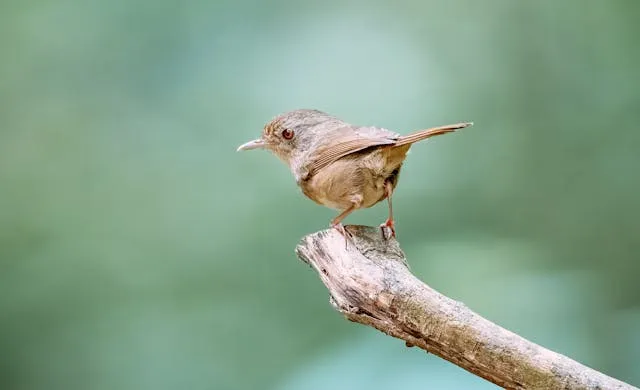
We can create a reference to Figure 1 via :ref[fig-example].
References
- [1] Albert Einstein. Über einen die Erzeugung und Verwandlung des Lichtes betreffenden heuristischen Gesichtspunkt. Annalen der Physik, 322, 6, p. 132-148 (1905)
❦